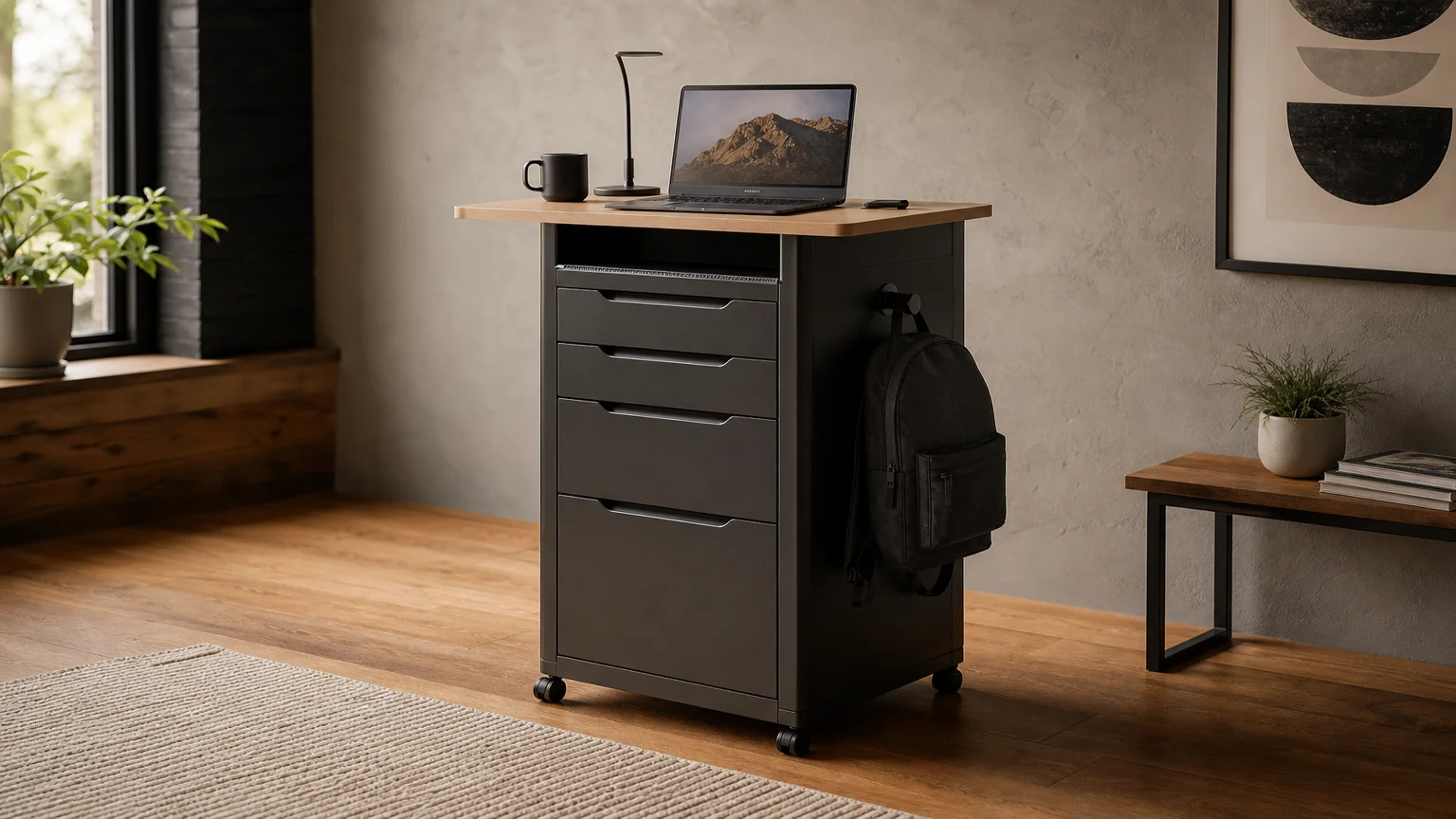
Cable routing, power, and presentation device zones
A compact presentation stand should make a small room easier to use, not simply add another surface. The planning begins with movement, visibility, and storage habits.
The strongest setups keep daily tools close, occasional tools hidden, and the desk top clear enough to switch between grooming and laptop work.
Choose furniture that supports the routine already happening in the room. A model that depends on perfect tidiness every day is rarely practical.
Look for calm proportions, stable hardware, and a finish that can handle frequent touch. These details create the premium feeling over time.
When the station can be reset in under a minute, it becomes part of the room instead of a constant chore.
This child page links back to the
main article and the prior cloud page when appropriate.
A compact presentation stand should make a small room easier to use, not simply add another surface. The planning begins with movement, visibility, and storage habits.
The strongest setups keep daily tools close, occasional tools hidden, and the desk top clear enough to switch between grooming and laptop work.
Choose furniture that supports the routine already happening in the room. A model that depends on perfect tidiness every day is rarely practical.
Look for calm proportions, stable hardware, and a finish that can handle frequent touch. These details create the premium feeling over time.
When the station can be reset in under a minute, it becomes part of the room instead of a constant chore.
The practical test is whether the desk still feels calm at the end of a busy day. If the surface cannot be reset quickly, reduce visible items before adding another organizer.
Small-room furniture should be evaluated in motion. Open the nearest closet, walk past the bed, pull the stool back, and check the display surface angle while actually holding the items used every morning.
A good support setup also respects maintenance. Dust should be easy to reach, cords should not trap hair or lint, and drawer dividers should lift out without a full reorganization.
When comparing models, give more weight to clearance, drawer behavior, finish durability, and light placement than to decorative styling alone.
A compact presentation stand should make a small room easier to use, not simply add another surface. The planning begins with movement, visibility, and storage habits.
The strongest setups keep daily tools close, occasional tools hidden, and the desk top clear enough to switch between grooming and laptop work.
Choose furniture that supports the routine already happening in the room. A model that depends on perfect tidiness every day is rarely practical.
Look for calm proportions, stable hardware, and a finish that can handle frequent touch. These details create the premium feeling over time.
When the station can be reset in under a minute, it becomes part of the room instead of a constant chore.
The practical test is whether the desk still feels calm at the end of a busy day. If the surface cannot be reset quickly, reduce visible items before adding another organizer.
Small-room furniture should be evaluated in motion. Open the nearest closet, walk past the bed, pull the stool back, and check the display surface angle while actually holding the items used every morning.
A good support setup also respects maintenance. Dust should be easy to reach, cords should not trap hair or lint, and drawer dividers should lift out without a full reorganization.
When comparing models, give more weight to clearance, drawer behavior, finish durability, and light placement than to decorative styling alone.
A compact presentation stand should make a small room easier to use, not simply add another surface. The planning begins with movement, visibility, and storage habits.
The strongest setups keep daily tools close, occasional tools hidden, and the desk top clear enough to switch between grooming and laptop work.
Choose furniture that supports the routine already happening in the room. A model that depends on perfect tidiness every day is rarely practical.
Look for calm proportions, stable hardware, and a finish that can handle frequent touch. These details create the premium feeling over time.
When the station can be reset in under a minute, it becomes part of the room instead of a constant chore.
The practical test is whether the desk still feels calm at the end of a busy day. If the surface cannot be reset quickly, reduce visible items before adding another organizer.
Small-room furniture should be evaluated in motion. Open the nearest closet, walk past the bed, pull the stool back, and check the display surface angle while actually holding the items used every morning.
A good support setup also respects maintenance. Dust should be easy to reach, cords should not trap hair or lint, and drawer dividers should lift out without a full reorganization.
When comparing models, give more weight to clearance, drawer behavior, finish durability, and light placement than to decorative styling alone.
A compact presentation stand should make a small room easier to use, not simply add another surface. The planning begins with movement, visibility, and storage habits.
The strongest setups keep daily tools close, occasional tools hidden, and the desk top clear enough to switch between grooming and laptop work.
Choose furniture that supports the routine already happening in the room. A model that depends on perfect tidiness every day is rarely practical.
Look for calm proportions, stable hardware, and a finish that can handle frequent touch. These details create the premium feeling over time.
When the station can be reset in under a minute, it becomes part of the room instead of a constant chore.
The practical test is whether the desk still feels calm at the end of a busy day. If the surface cannot be reset quickly, reduce visible items before adding another organizer.
Small-room furniture should be evaluated in motion. Open the nearest closet, walk past the bed, pull the stool back, and check the display surface angle while actually holding the items used every morning.
A good support setup also respects maintenance. Dust should be easy to reach, cords should not trap hair or lint, and drawer dividers should lift out without a full reorganization.
When comparing models, give more weight to clearance, drawer behavior, finish durability, and light placement than to decorative styling alone.
A compact presentation stand should make a small room easier to use, not simply add another surface. The planning begins with movement, visibility, and storage habits.
The strongest setups keep daily tools close, occasional tools hidden, and the desk top clear enough to switch between grooming and laptop work.
Choose furniture that supports the routine already happening in the room. A model that depends on perfect tidiness every day is rarely practical.
Look for calm proportions, stable hardware, and a finish that can handle frequent touch. These details create the premium feeling over time.
When the station can be reset in under a minute, it becomes part of the room instead of a constant chore.
The practical test is whether the desk still feels calm at the end of a busy day. If the surface cannot be reset quickly, reduce visible items before adding another organizer.
Small-room furniture should be evaluated in motion. Open the nearest closet, walk past the bed, pull the stool back, and check the display surface angle while actually holding the items used every morning.
A good support setup also respects maintenance. Dust should be easy to reach, cords should not trap hair or lint, and drawer dividers should lift out without a full reorganization.
When comparing models, give more weight to clearance, drawer behavior, finish durability, and light placement than to decorative styling alone.
A compact presentation stand should make a small room easier to use, not simply add another surface. The planning begins with movement, visibility, and storage habits.
The strongest setups keep daily tools close, occasional tools hidden, and the desk top clear enough to switch between grooming and laptop work.
Choose furniture that supports the routine already happening in the room. A model that depends on perfect tidiness every day is rarely practical.
Look for calm proportions, stable hardware, and a finish that can handle frequent touch. These details create the premium feeling over time.
When the station can be reset in under a minute, it becomes part of the room instead of a constant chore.
The practical test is whether the desk still feels calm at the end of a busy day. If the surface cannot be reset quickly, reduce visible items before adding another organizer.
Small-room furniture should be evaluated in motion. Open the nearest closet, walk past the bed, pull the stool back, and check the display surface angle while actually holding the items used every morning.
A good support setup also respects maintenance. Dust should be easy to reach, cords should not trap hair or lint, and drawer dividers should lift out without a full reorganization.
When comparing models, give more weight to clearance, drawer behavior, finish durability, and light placement than to decorative styling alone.
A compact presentation stand should make a small room easier to use, not simply add another surface. The planning begins with movement, visibility, and storage habits.
The strongest setups keep daily tools close, occasional tools hidden, and the desk top clear enough to switch between grooming and laptop work.
Choose furniture that supports the routine already happening in the room. A model that depends on perfect tidiness every day is rarely practical.