Room presence, audience angle, and speaker clearance
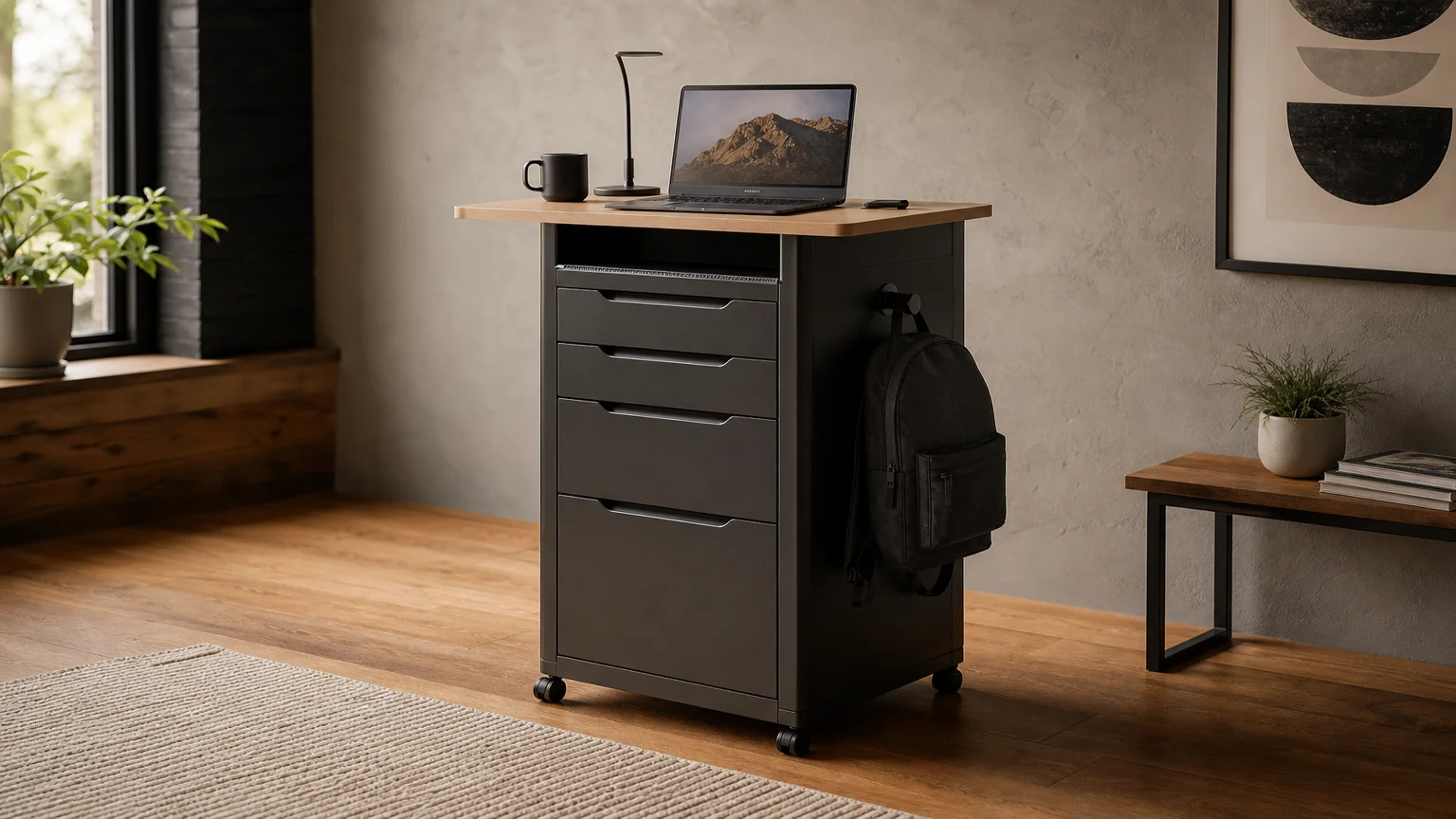
A compact presentation stand succeeds or fails in the first metre around the chair. Measure the open floor in front of the desk, the stool pull-back distance, and the side-to-side reach before judging any model by width alone.
Depth matters because presentation stand work brings the face forward while desk work pulls the elbows back. A shallow desk can still work if the display surface is close, lighting is angled from the side, and the daily tray has a fixed parking spot.
Leave a realistic knee and drawer clearance zone. If a drawer hits the stool or a chair arm catches the wall, the desk will feel annoying even if it technically fits the floor plan.
For bedrooms and studio apartments, mark the footprint with tape for one evening. Walk past it, open nearby doors, and check whether the desk blocks the path when the stool is left out.
The best compact layout is not the smallest possible desk. It is the smallest desk that still lets the user sit squarely, reach tools naturally, and reset the top without moving half the room.
This child page links back to the
main article and the prior cloud page when appropriate.
A compact presentation stand succeeds or fails in the first metre around the chair. Measure the open floor in front of the desk, the stool pull-back distance, and the side-to-side reach before judging any model by width alone.
Depth matters because presentation stand work brings the face forward while desk work pulls the elbows back. A shallow desk can still work if the display surface is close, lighting is angled from the side, and the daily tray has a fixed parking spot.
Leave a realistic knee and drawer clearance zone. If a drawer hits the stool or a chair arm catches the wall, the desk will feel annoying even if it technically fits the floor plan.
For bedrooms and studio apartments, mark the footprint with tape for one evening. Walk past it, open nearby doors, and check whether the desk blocks the path when the stool is left out.
The best compact layout is not the smallest possible desk. It is the smallest desk that still lets the user sit squarely, reach tools naturally, and reset the top without moving half the room.
The practical test is whether the desk still feels calm at the end of a busy day. If the surface cannot be reset quickly, reduce visible items before adding another organizer.
Small-room furniture should be evaluated in motion. Open the nearest closet, walk past the bed, pull the stool back, and check the display surface angle while actually holding the items used every morning.
A good support setup also respects maintenance. Dust should be easy to reach, cords should not trap hair or lint, and drawer dividers should lift out without a full reorganization.
When comparing models, give more weight to clearance, drawer behavior, finish durability, and light placement than to decorative styling alone.
A compact presentation stand succeeds or fails in the first metre around the chair. Measure the open floor in front of the desk, the stool pull-back distance, and the side-to-side reach before judging any model by width alone.
Depth matters because presentation stand work brings the face forward while desk work pulls the elbows back. A shallow desk can still work if the display surface is close, lighting is angled from the side, and the daily tray has a fixed parking spot.
Leave a realistic knee and drawer clearance zone. If a drawer hits the stool or a chair arm catches the wall, the desk will feel annoying even if it technically fits the floor plan.
For bedrooms and studio apartments, mark the footprint with tape for one evening. Walk past it, open nearby doors, and check whether the desk blocks the path when the stool is left out.
The best compact layout is not the smallest possible desk. It is the smallest desk that still lets the user sit squarely, reach tools naturally, and reset the top without moving half the room.
The practical test is whether the desk still feels calm at the end of a busy day. If the surface cannot be reset quickly, reduce visible items before adding another organizer.
Small-room furniture should be evaluated in motion. Open the nearest closet, walk past the bed, pull the stool back, and check the display surface angle while actually holding the items used every morning.
A good support setup also respects maintenance. Dust should be easy to reach, cords should not trap hair or lint, and drawer dividers should lift out without a full reorganization.
When comparing models, give more weight to clearance, drawer behavior, finish durability, and light placement than to decorative styling alone.
A compact presentation stand succeeds or fails in the first metre around the chair. Measure the open floor in front of the desk, the stool pull-back distance, and the side-to-side reach before judging any model by width alone.
Depth matters because presentation stand work brings the face forward while desk work pulls the elbows back. A shallow desk can still work if the display surface is close, lighting is angled from the side, and the daily tray has a fixed parking spot.
Leave a realistic knee and drawer clearance zone. If a drawer hits the stool or a chair arm catches the wall, the desk will feel annoying even if it technically fits the floor plan.
For bedrooms and studio apartments, mark the footprint with tape for one evening. Walk past it, open nearby doors, and check whether the desk blocks the path when the stool is left out.
The best compact layout is not the smallest possible desk. It is the smallest desk that still lets the user sit squarely, reach tools naturally, and reset the top without moving half the room.
The practical test is whether the desk still feels calm at the end of a busy day. If the surface cannot be reset quickly, reduce visible items before adding another organizer.
Small-room furniture should be evaluated in motion. Open the nearest closet, walk past the bed, pull the stool back, and check the display surface angle while actually holding the items used every morning.
A good support setup also respects maintenance. Dust should be easy to reach, cords should not trap hair or lint, and drawer dividers should lift out without a full reorganization.
When comparing models, give more weight to clearance, drawer behavior, finish durability, and light placement than to decorative styling alone.
A compact presentation stand succeeds or fails in the first metre around the chair. Measure the open floor in front of the desk, the stool pull-back distance, and the side-to-side reach before judging any model by width alone.
Depth matters because presentation stand work brings the face forward while desk work pulls the elbows back. A shallow desk can still work if the display surface is close, lighting is angled from the side, and the daily tray has a fixed parking spot.
Leave a realistic knee and drawer clearance zone. If a drawer hits the stool or a chair arm catches the wall, the desk will feel annoying even if it technically fits the floor plan.
For bedrooms and studio apartments, mark the footprint with tape for one evening. Walk past it, open nearby doors, and check whether the desk blocks the path when the stool is left out.
The best compact layout is not the smallest possible desk. It is the smallest desk that still lets the user sit squarely, reach tools naturally, and reset the top without moving half the room.
The practical test is whether the desk still feels calm at the end of a busy day. If the surface cannot be reset quickly, reduce visible items before adding another organizer.
Small-room furniture should be evaluated in motion. Open the nearest closet, walk past the bed, pull the stool back, and check the display surface angle while actually holding the items used every morning.
A good support setup also respects maintenance. Dust should be easy to reach, cords should not trap hair or lint, and drawer dividers should lift out without a full reorganization.
When comparing models, give more weight to clearance, drawer behavior, finish durability, and light placement than to decorative styling alone.
A compact presentation stand succeeds or fails in the first metre around the chair. Measure the open floor in front of the desk, the stool pull-back distance, and the side-to-side reach before judging any model by width alone.
Depth matters because presentation stand work brings the face forward while desk work pulls the elbows back. A shallow desk can still work if the display surface is close, lighting is angled from the side, and the daily tray has a fixed parking spot.
Leave a realistic knee and drawer clearance zone. If a drawer hits the stool or a chair arm catches the wall, the desk will feel annoying even if it technically fits the floor plan.
For bedrooms and studio apartments, mark the footprint with tape for one evening. Walk past it, open nearby doors, and check whether the desk blocks the path when the stool is left out.
The best compact layout is not the smallest possible desk. It is the smallest desk that still lets the user sit squarely, reach tools naturally, and reset the top without moving half the room.