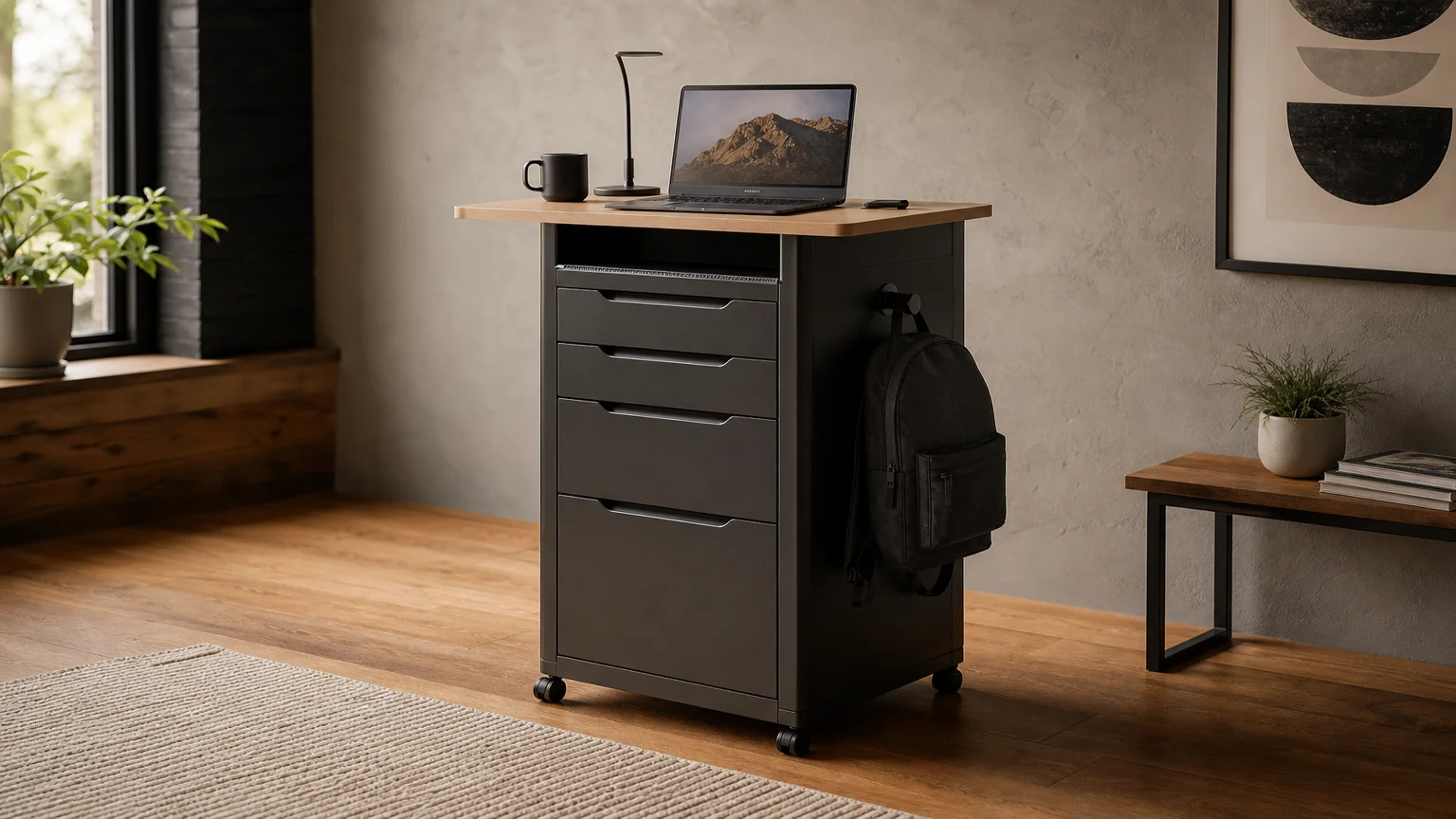
Display height and posture balance
Display Height height is a posture decision. If the display surface line is too high, the neck extends; if it is too low, the back rounds forward. Set the display surface around the seated eye line before adding decorative pieces.
A wall display surface can make a compact desk feel lighter, while a standing display surface is easier to adjust in rented spaces. The trade-off is stability and the amount of usable surface left behind the display surface base.
Check the face-to-display surface distance during a normal morning routine, not only while sitting still. Reaching for a brush, charger, or compact should not pull the body into a twisted position.
For shared work-and-presentation stand use, choose a display surface arrangement that can visually disappear during focused desk time. A folding or slim framed display surface often keeps the station calmer than a large decorative display surface.
Good posture at a presentation stand feels ordinary: shoulders relaxed, feet planted, elbows close enough to the body, and no repeated lean just to see detail.
This child page links back to the
main article and the prior cloud page when appropriate.
Display Height height is a posture decision. If the display surface line is too high, the neck extends; if it is too low, the back rounds forward. Set the display surface around the seated eye line before adding decorative pieces.
A wall display surface can make a compact desk feel lighter, while a standing display surface is easier to adjust in rented spaces. The trade-off is stability and the amount of usable surface left behind the display surface base.
Check the face-to-display surface distance during a normal morning routine, not only while sitting still. Reaching for a brush, charger, or compact should not pull the body into a twisted position.
For shared work-and-presentation stand use, choose a display surface arrangement that can visually disappear during focused desk time. A folding or slim framed display surface often keeps the station calmer than a large decorative display surface.
Good posture at a presentation stand feels ordinary: shoulders relaxed, feet planted, elbows close enough to the body, and no repeated lean just to see detail.
The practical test is whether the desk still feels calm at the end of a busy day. If the surface cannot be reset quickly, reduce visible items before adding another organizer.
Small-room furniture should be evaluated in motion. Open the nearest closet, walk past the bed, pull the stool back, and check the display surface angle while actually holding the items used every morning.
A good support setup also respects maintenance. Dust should be easy to reach, cords should not trap hair or lint, and drawer dividers should lift out without a full reorganization.
When comparing models, give more weight to clearance, drawer behavior, finish durability, and light placement than to decorative styling alone.
Display Height height is a posture decision. If the display surface line is too high, the neck extends; if it is too low, the back rounds forward. Set the display surface around the seated eye line before adding decorative pieces.
A wall display surface can make a compact desk feel lighter, while a standing display surface is easier to adjust in rented spaces. The trade-off is stability and the amount of usable surface left behind the display surface base.
Check the face-to-display surface distance during a normal morning routine, not only while sitting still. Reaching for a brush, charger, or compact should not pull the body into a twisted position.
For shared work-and-presentation stand use, choose a display surface arrangement that can visually disappear during focused desk time. A folding or slim framed display surface often keeps the station calmer than a large decorative display surface.
Good posture at a presentation stand feels ordinary: shoulders relaxed, feet planted, elbows close enough to the body, and no repeated lean just to see detail.
The practical test is whether the desk still feels calm at the end of a busy day. If the surface cannot be reset quickly, reduce visible items before adding another organizer.
Small-room furniture should be evaluated in motion. Open the nearest closet, walk past the bed, pull the stool back, and check the display surface angle while actually holding the items used every morning.
A good support setup also respects maintenance. Dust should be easy to reach, cords should not trap hair or lint, and drawer dividers should lift out without a full reorganization.
When comparing models, give more weight to clearance, drawer behavior, finish durability, and light placement than to decorative styling alone.
Display Height height is a posture decision. If the display surface line is too high, the neck extends; if it is too low, the back rounds forward. Set the display surface around the seated eye line before adding decorative pieces.
A wall display surface can make a compact desk feel lighter, while a standing display surface is easier to adjust in rented spaces. The trade-off is stability and the amount of usable surface left behind the display surface base.
Check the face-to-display surface distance during a normal morning routine, not only while sitting still. Reaching for a brush, charger, or compact should not pull the body into a twisted position.
For shared work-and-presentation stand use, choose a display surface arrangement that can visually disappear during focused desk time. A folding or slim framed display surface often keeps the station calmer than a large decorative display surface.
Good posture at a presentation stand feels ordinary: shoulders relaxed, feet planted, elbows close enough to the body, and no repeated lean just to see detail.
The practical test is whether the desk still feels calm at the end of a busy day. If the surface cannot be reset quickly, reduce visible items before adding another organizer.
Small-room furniture should be evaluated in motion. Open the nearest closet, walk past the bed, pull the stool back, and check the display surface angle while actually holding the items used every morning.
A good support setup also respects maintenance. Dust should be easy to reach, cords should not trap hair or lint, and drawer dividers should lift out without a full reorganization.
When comparing models, give more weight to clearance, drawer behavior, finish durability, and light placement than to decorative styling alone.
Display Height height is a posture decision. If the display surface line is too high, the neck extends; if it is too low, the back rounds forward. Set the display surface around the seated eye line before adding decorative pieces.
A wall display surface can make a compact desk feel lighter, while a standing display surface is easier to adjust in rented spaces. The trade-off is stability and the amount of usable surface left behind the display surface base.
Check the face-to-display surface distance during a normal morning routine, not only while sitting still. Reaching for a brush, charger, or compact should not pull the body into a twisted position.
For shared work-and-presentation stand use, choose a display surface arrangement that can visually disappear during focused desk time. A folding or slim framed display surface often keeps the station calmer than a large decorative display surface.
Good posture at a presentation stand feels ordinary: shoulders relaxed, feet planted, elbows close enough to the body, and no repeated lean just to see detail.
The practical test is whether the desk still feels calm at the end of a busy day. If the surface cannot be reset quickly, reduce visible items before adding another organizer.
Small-room furniture should be evaluated in motion. Open the nearest closet, walk past the bed, pull the stool back, and check the display surface angle while actually holding the items used every morning.
A good support setup also respects maintenance. Dust should be easy to reach, cords should not trap hair or lint, and drawer dividers should lift out without a full reorganization.
When comparing models, give more weight to clearance, drawer behavior, finish durability, and light placement than to decorative styling alone.
Display Height height is a posture decision. If the display surface line is too high, the neck extends; if it is too low, the back rounds forward. Set the display surface around the seated eye line before adding decorative pieces.
A wall display surface can make a compact desk feel lighter, while a standing display surface is easier to adjust in rented spaces. The trade-off is stability and the amount of usable surface left behind the display surface base.
Check the face-to-display surface distance during a normal morning routine, not only while sitting still. Reaching for a brush, charger, or compact should not pull the body into a twisted position.
For shared work-and-presentation stand use, choose a display surface arrangement that can visually disappear during focused desk time. A folding or slim framed display surface often keeps the station calmer than a large decorative display surface.
Good posture at a presentation stand feels ordinary: shoulders relaxed, feet planted, elbows close enough to the body, and no repeated lean just to see detail.
The practical test is whether the desk still feels calm at the end of a busy day. If the surface cannot be reset quickly, reduce visible items before adding another organizer.
Small-room furniture should be evaluated in motion. Open the nearest closet, walk past the bed, pull the stool back, and check the display surface angle while actually holding the items used every morning.
A good support setup also respects maintenance. Dust should be easy to reach, cords should not trap hair or lint, and drawer dividers should lift out without a full reorganization.