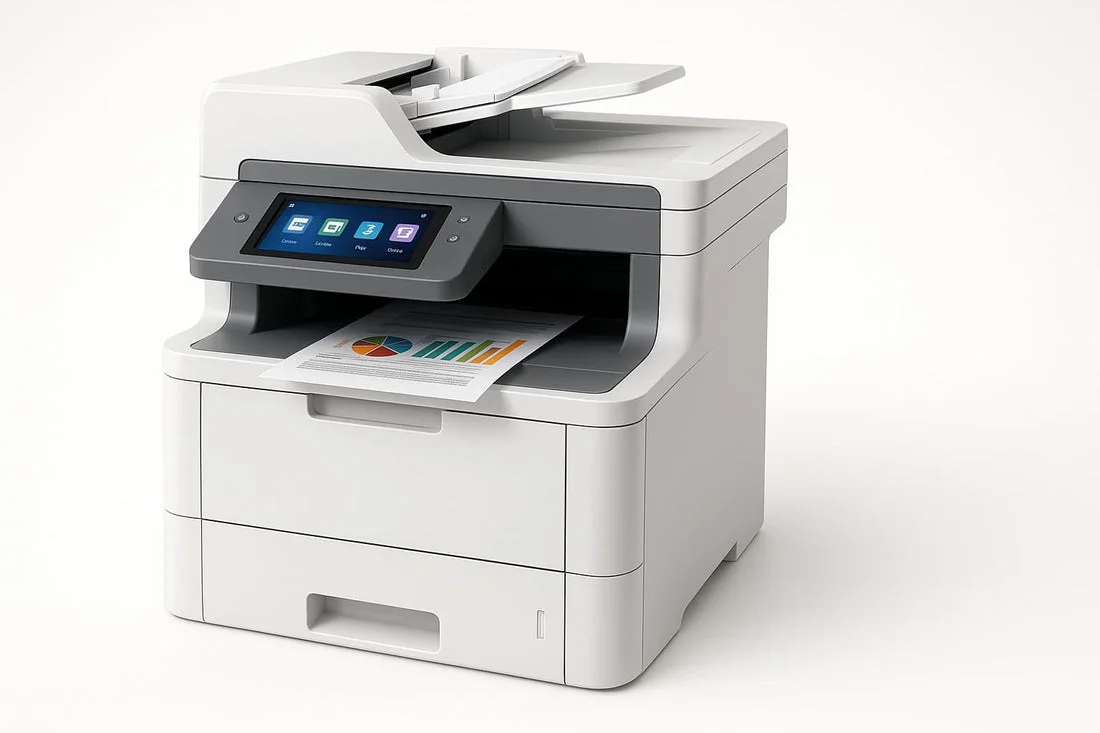
How to choose a high-speed printer that actually helps office workflow
For the active product shortlist, start with LeStallion’s 5 Best High-Speed Printers for Offices review, then use this support guide to judge real speed, paper handling, duplex work, team sharing, running costs, placement, noise, and reliability.
Real Speed. Printer speed should be judged by the jobs an office actually prints, not only the fastest pages-per-minute number. Warm-up time, first-page-out speed, duplex speed, and large-file handling can matter more during daily work. For high-speed office printer research, the useful question is whether print work moves cleanly through the office instead of creating a new bottleneck.
Real Speed check. Compare the claimed speed with invoices, packets, labels, forms, and reports.
Paper Flow. Tray capacity, output stacking, envelope handling, and jam access decide whether a fast printer remains fast when several people use it. For high-speed office printer research, the useful question is whether print work moves cleanly through the office instead of creating a new bottleneck.
Paper Flow check. Check where paper loads, where finished sheets land, and how jams are cleared.
Team Sharing. Network reliability, driver setup, mobile printing, secure release, and permissions affect shared office printing. For high-speed office printer research, the useful question is whether print work moves cleanly through the office instead of creating a new bottleneck.
Team Sharing check. A fast printer that is hard to connect will slow the whole team.
Cost Control. Toner or ink yield, drum replacement, maintenance kits, and energy use can outweigh the purchase price. For high-speed office printer research, the useful question is whether print work moves cleanly through the office instead of creating a new bottleneck.
Cost Control check. Estimate monthly pages and compare cost per page before choosing.
Placement. Fast printers can be larger, warmer, and louder than personal models. Placement should fit staff movement, calls, and paper storage. For high-speed office printer research, the useful question is whether print work moves cleanly through the office instead of creating a new bottleneck.
Placement check. Measure the real footprint with trays open and service doors accessible.
Long-Term Fit. Office printers need dependable supplies, clear support, firmware stability, and simple maintenance routines. For high-speed office printer research, the useful question is whether print work moves cleanly through the office instead of creating a new bottleneck.
Long-Term Fit check. Choose a model the team can keep running without constant troubleshooting.
Morning print queue. In many offices, print demand arrives in bursts: opening packets, shipping paperwork, meeting handouts, invoices, and end-of-day reports. A useful high-speed printer handles those bursts without forcing people to stand beside the machine and babysit every job.
First-page reality. Pages-per-minute ratings can hide the moment that workers feel most: waiting for the first sheet. If the printer sleeps deeply, warms slowly, or pauses on complex files, the desk may not feel faster. First-page behavior matters for quick one-off documents.
Duplex discipline. Automatic duplex printing is valuable when offices produce packets, contracts, policies, and drafts. But duplex speed, page curl, and jam behavior should be considered. Slow duplexing can make a fast printer feel average during real document sets.
Driver simplicity. A printer shared by many people should not require constant driver drama. Clear setup, predictable default trays, sensible paper-size handling, and stable network discovery help the machine feel like infrastructure instead of a daily support ticket.
Security basics. Some workplaces need secure release, PIN printing, or user controls so sensitive documents do not sit in an output tray. These features matter for HR, finance, legal, medical-adjacent admin, and client paperwork. Match security to the document type.
Supply planning. High-speed printers can consume toner quickly when teams print heavily. Check cartridge yield, multi-pack availability, drum life, waste containers, and whether supplies are easy to source. A fast printer with hard-to-find consumables can become downtime.
Noise and heat. The best location may not be the closest desk. Larger printers can make fan noise, paper movement noise, and heat during long runs. Put the machine where it supports access without interrupting calls, focus work, or front-desk conversations.
Maintenance access. Jams and toner changes are normal. The printer should have enough clearance for doors, trays, rear access, and waste containers. If maintenance requires moving furniture, the office will delay small fixes until they become bigger problems.
Remote work bridge. Hybrid teams still print forms, shipping labels, signed packets, and meeting materials. A shared printer should make those moments easy for people moving between laptops, conference rooms, and admin desks. Network clarity matters as much as raw speed.
End-of-day reset. A good office printer ends the day ready for tomorrow: paper restocked, output tray clear, toner warnings visible, and no half-finished queue. The right model supports that reset with clear alerts and simple front-panel messages.
Procurement lens. If several departments use the printer, ask each team what they print most often. Finance, operations, HR, sales, and reception may care about different paper sizes, color needs, duplex settings, or confidentiality. The best choice fits the shared pattern.
Practical trial. Before buying, imagine one busy day: twenty invoices, a client packet, a last-minute meeting handout, a shipping label batch, and a jam during a call. A strong office printer should handle that rhythm calmly and be easy to recover when something goes wrong.
Service corridor check. Offices should plan the physical route around the printer, not only the machine specs. Someone will need to carry paper, pull out trays, remove a jammed sheet, replace toner, collect a warm stack, and sort documents without blocking a walkway. A printer that has enough breathing room is faster in practice because people can use it without awkward movements.
Mixed-document behavior. Real office jobs are rarely one perfect stack of identical pages. A team may print a report with charts, a few labels, envelopes, a signed form, and a black-and-white draft in the same hour. The printer should handle common paper changes and driver settings clearly so the user does not waste time guessing which tray or mode is active.
Supply warning habits. High-speed printers need honest warnings. If toner alerts appear too late, the office may run out during a deadline; if alerts appear too early, staff may ignore them. Look for clear supply status, easy cartridge access, and a routine for keeping backup supplies without overstocking expensive consumables.
Shared accountability. A shared printer works best when responsibility is simple. Decide who restocks paper, who orders toner, who clears repeated jams, and who checks the queue before a meeting. The printer itself should support that routine with visible messages and controls that do not require specialist knowledge.
Growth allowance. A small office can outgrow a personal printer quickly. If hiring, client volume, shipping, or compliance paperwork is increasing, choose a printer with enough capacity and durability for the next stage. Buying only for today’s lightest month can make the office replace the machine sooner than expected.
Final office readiness pass. Before approving a high-speed printer, walk through the whole document path: who sends the job, where the paper starts, where the output lands, who notices warnings, who fixes jams, and who orders supplies. This simple pass often reveals whether the fastest-looking model will genuinely support the office or merely move one bottleneck to another part of the workflow.
Simple success signal. The printer should make busy document work feel calmer, not louder, slower, or more confusing.
Final buffer check. Keep one nearby shelf for paper and supplies so fast printing stays organized during deadline days.
Print Speed and Real Office Volume
Print Speed and Real Office Volume gives one focused way to compare a high-speed printer before putting it into a busy office workflow.
Paper Handling and Tray Capacity
Paper Handling and Tray Capacity gives one focused way to compare a high-speed printer before putting it into a busy office workflow.
Duplex, Network, and Team Sharing
Duplex, Network, and Team Sharing gives one focused way to compare a high-speed printer before putting it into a busy office workflow.
Toner, Ink, and Running Costs
Toner, Ink, and Running Costs gives one focused way to compare a high-speed printer before putting it into a busy office workflow.
Footprint, Noise, and Placement
Footprint, Noise, and Placement gives one focused way to compare a high-speed printer before putting it into a busy office workflow.
Reliability, Support, and Long-Term Fit
Reliability, Support, and Long-Term Fit gives one focused way to compare a high-speed printer before putting it into a busy office workflow.
Bottom-line office printer check
After narrowing the options, revisit the LeStallion high-speed printer shortlist and compare it with your real print volume, paper sizes, network setup, supply plan, and team maintenance habits.
Cloud-chain note: this Neocities support guide follows the prior Vultr page on desktop calculators for businesses, keeping the office-equipment path connected near the bottom.